Add a paper.
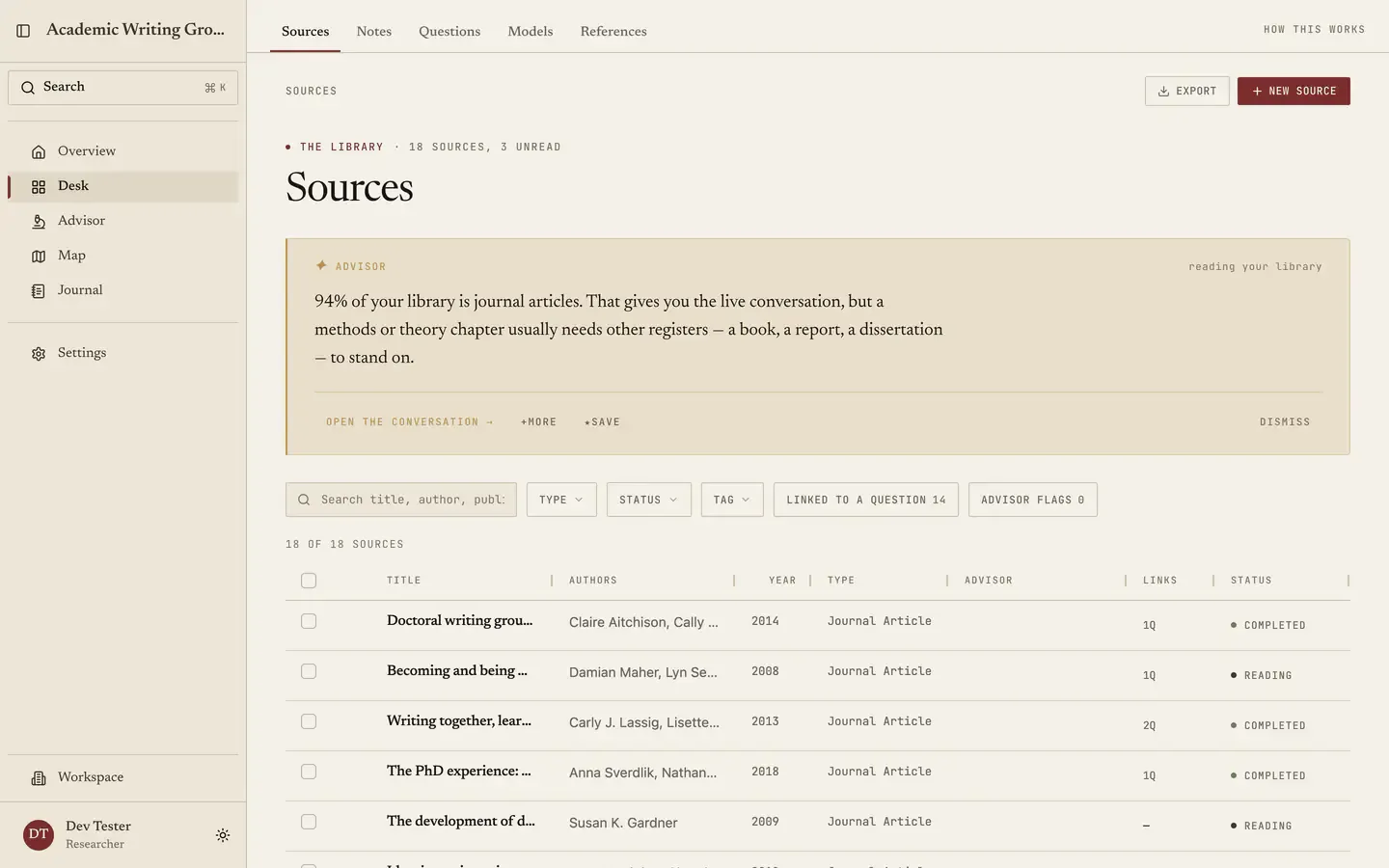
Drop a PDF or paste a DOI. Quester pulls metadata, authors, abstract, and citations. No manual entry. No four versions of the same reading list.
One workspace for the years of work a PhD actually takes, built on decades of dissertation advising. Sources, notes, research questions, and an AI advisor for the days between meetings with your real one. It knows the project, but knows the writing is yours.
No setup, no migration. Bring one paper and the workspace builds from there.
Drop a PDF or paste a DOI. Quester pulls metadata, authors, abstract, and citations. No manual entry. No four versions of the same reading list.
Notes link back to the passage they came from. Stay anchored to the source. Stay searchable in year five.
Notes and sources attach to it as you read. Your argument accumulates. Models hang off questions, in the order they should.
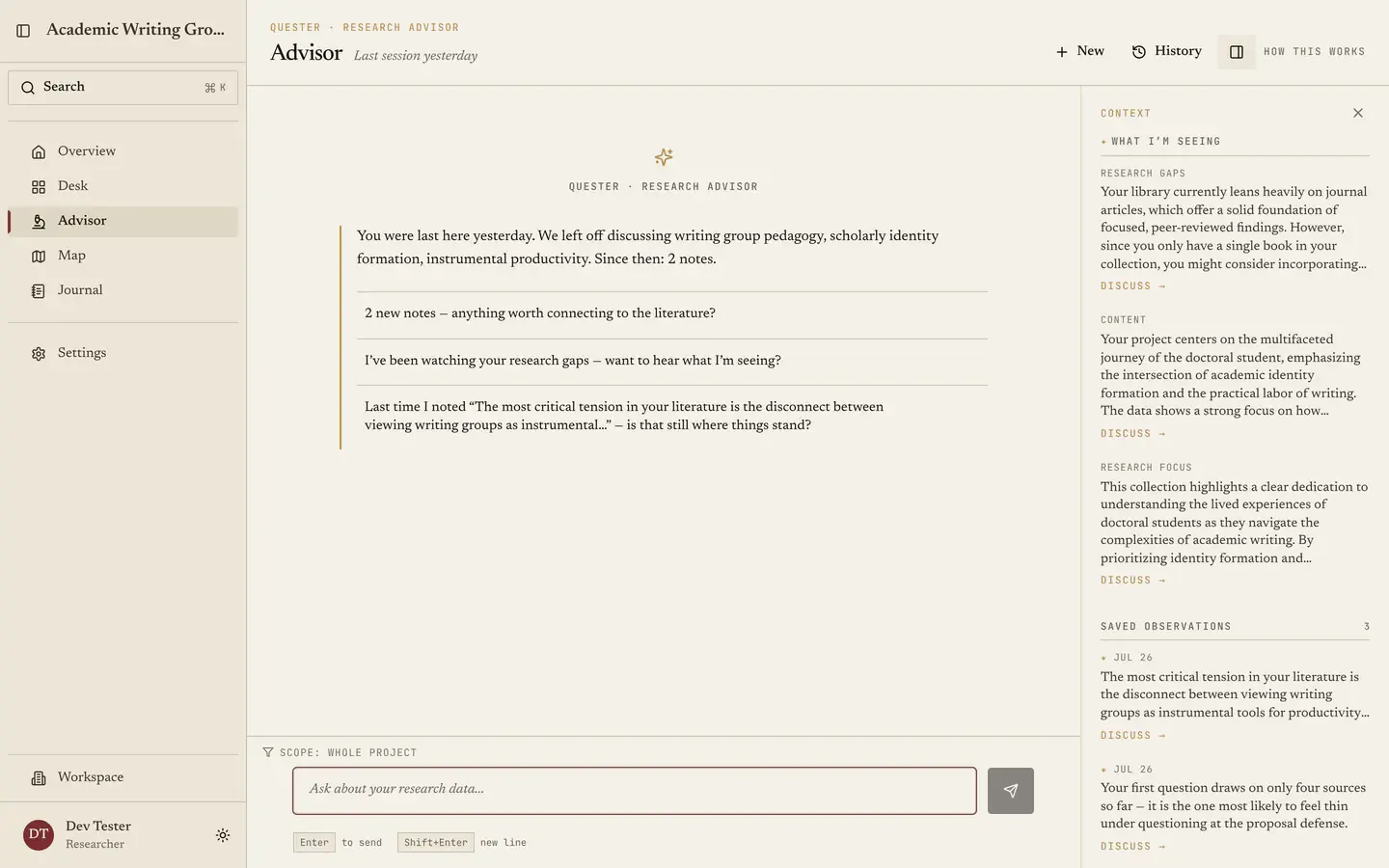
What themes are emerging? Where is my literature thin? What contradicts Q2? The advisor reads what you've read and gives you back gaps, contradictions, and source trails.
Citation lists, theme maps, summary tables. Standard academic formats. Take your work with you, always.
Sources, notes, research questions, and a graph of how they connect. The structure reflects what dissertation work actually needs: research questions before models, methodology before data.
Import a Zotero export, upload PDFs, or paste a bibliography. Annotate, tag, and link to questions. Export citations in 9,000+ styles.
Full-text search across every paper, note, and highlight in your library.
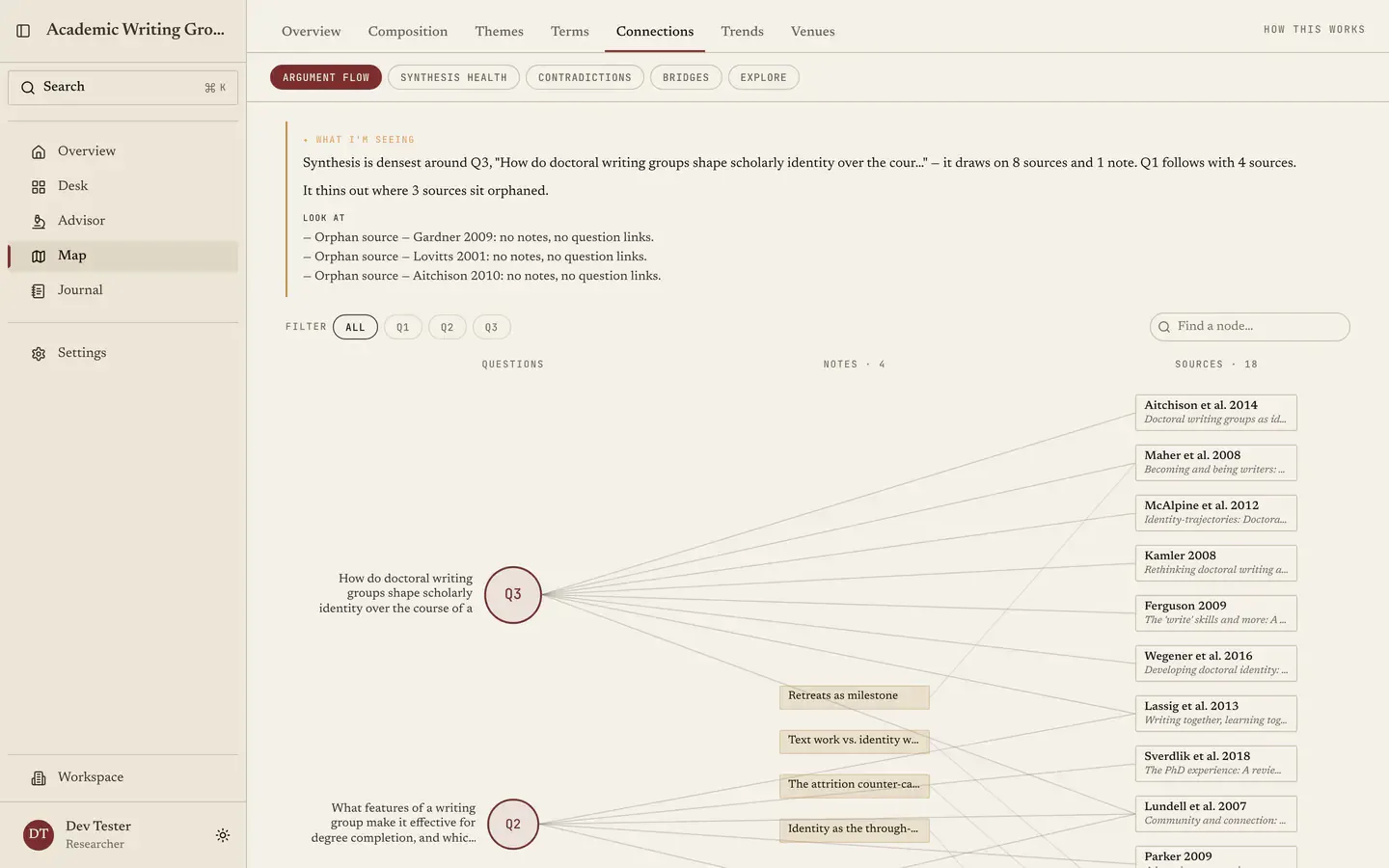
See which questions your sources actually answer, where notes reach the argument, and which reading still sits orphaned.
The graph view shows theme clusters and contradictions across your reading.
The structure of a defensible dissertation, enforced gently. Build typed argument models (predictor, mediator, outcome) that tie back to a question.
Every question shows the sources, notes, and models that back it, and the ones still missing.
Linked to literature, to questions, to each other. Your year-one thinking is still here in year five, organized the way you'll need it for the chapter you haven't written yet.
The advisor opens already knowing every source, note, and conclusion in your project.
An advisor for the days between meetings with your real one. It opens knowing your sources, your questions, your notes, and what your committee asked at your proposal defense. Its judgment is earned from decades of dissertation advising. It does the work of a junior collaborator. It will not do the work of the scholar.
It begins as a reader of your project and deepens from there. A semester in, it remembers what you've forgotten: the revised question, the note in the margin, what chapter 2 was supposed to argue. When you log in, you're continuing a conversation with a version of yourself who's been keeping notes.

Each tool does a piece of the work. The cost is that none of them know about each other. Quester's value is the connection: sources, notes, claims, and questions held together across the years a dissertation takes.
Quester has been an invaluable asset to my research journey. It teaches me aspects of research that weren't covered in my coursework. It's more than a tool; it's a mentor in my academic pursuits.
Quester helped me write grants and articles by quickly identifying gaps in the literature, visualizing conceptual models, and determining the novelty of my research methods.
A dissertation is the longest project most people will ever take on. Software shouldn't be the friction.
For testing the workspace on a single research question or chapter.
Start freeFor the dissertation. Designed for the multi-year reality of doctoral work.
Start ScholarBuying for a cohort? Department plans from $3,000/year →
No. By design and by belief. The advisor declines tasks that constitute authorship: drafts of chapters, generated literature reviews, and written conclusions. It handles citations, summaries, gap-finding, methodology checks, and the executional work of scholarship. The thinking stays with you.
No. Sources, notes, and questions aren't used to train any AI model, whether Quester's or otherwise. Pre-publication work stays private.
Quester works as a structured workspace without the advisor on. You'll have sources, notes, questions, and methodology organized whether or not you ever use the AI. Many users start in this mode and turn the advisor on later, if at all.
The workspace begins where you are. Free to start; the full advisor unlocks once you've imported eight sources.
Start free