The Architecture of Thought: The Nature of Writing
Introducing Quester and the Quester Group
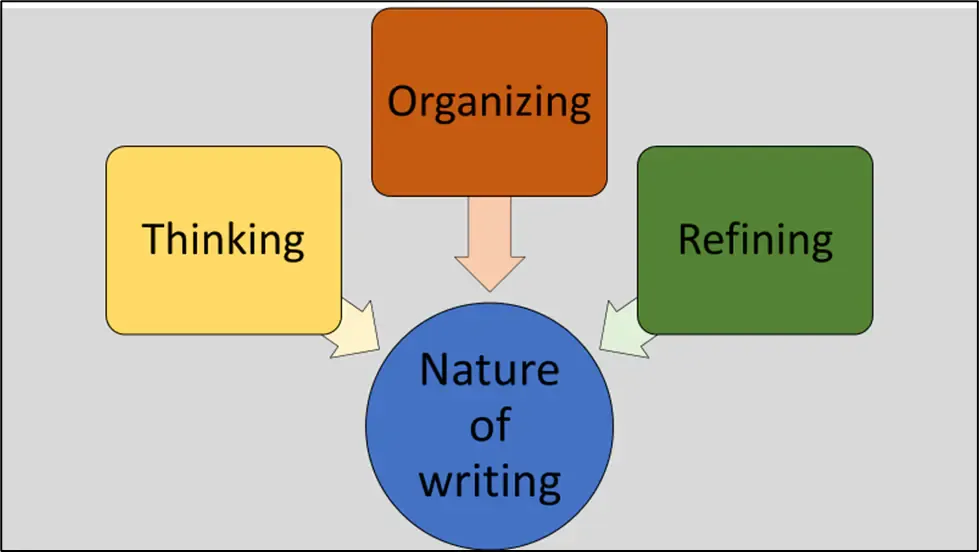
Graduate students often perceive writing as a terminal task: the final polish applied to a finished research project. Such a perspective fundamentally misrepresents the nature of writing. Writing does not merely record knowledge; writing creates knowledge. Students who treat their drafts as static products miss the essential purpose for the nature of writing. Writing functions as an iterative, cognitive process and a mechanism for thinking, organizing ideas, and refining intellectual positions.
The Myth of the Natural Writer
Within the United States, roughly four million graduate students each year pursue advanced degrees across diverse content disciplines. Yet, only about twenty-two thousand of those students specialize in the language arts. This statistic carries profound implications. Most students operate outside the field of language arts, they often assume writing represents a skill mastered long ago in primary, secondary, or undergraduate education. However, the specialized requirements of the thesis or dissertation often expose deep gaps in this assumption.
Interestingly, those twenty-two thousand students who study the language arts recognize no one ever truly knows everything about writing. They view their study of the language arts as a lifelong commitment to research, experimentation, and revision. If these students maintain such humility toward the nature of writing, students in other disciplines should consider adopting this same mindset to their writing. Students should treat writing as a living, breathing architecture of thought. This may assist them in moving past the “perfect first draft” anxiety and embrace the messiness of actual research and writing.
The Triad of Academic Writing: Reading, Constructing, and Editing
Writing for graduate students consists of far more than putting words on a page. Writing emerges from the integration of three distinct, yet inseparable, activities: reading, constructing, and editing. Reading involves a deep engagement with existing literature. Constructing represents the generation of new ideas, arguments, and frameworks as wells as visuals based on that foundation. Editing acts as the refinement of voice, logic, and clarity.
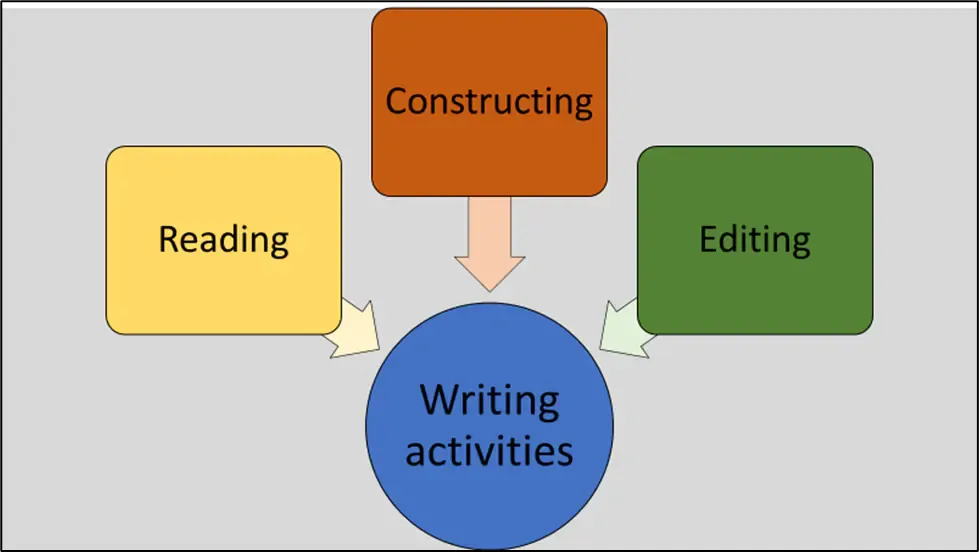
When students separate these activities, research suffers. Reading becomes passive, constructing feels forced, and editing turns into a superficial check for grammar rather than deepening of argumentation. Quester encourages a model where these three activities occur iteratively and repetitively as well as simultaneously and continuously, transforming the act of writing into an organic cycle of growth.
The Architecture of Daily Practice
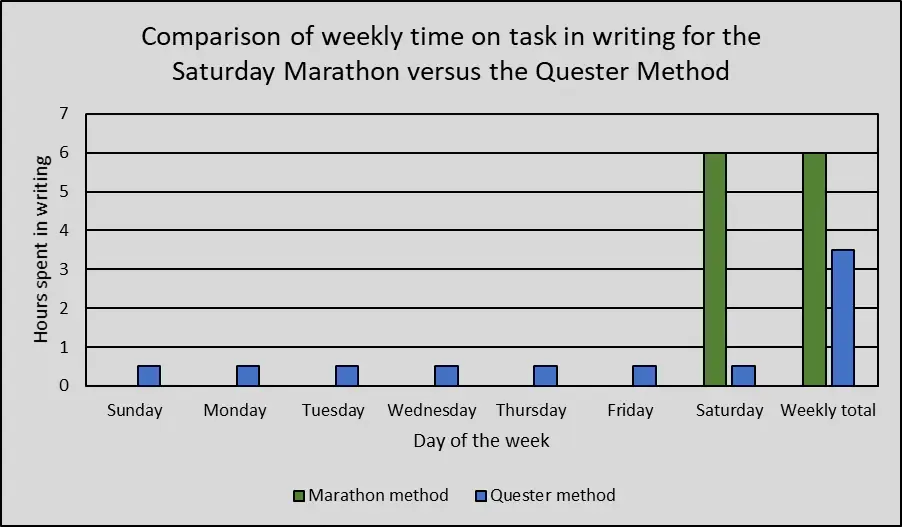
A common, destructive habit among graduate students involves the “Saturday Writing Marathon.” Many students attempt to condense an entire week’s worth of intellectual labor into a single, six-to-eight-hour writing session. This approach fails to account for how the human brain processes complex information or the nature of the academy. High-level synthesis requires time. Ideas need time to settle, grow, and rearrange themselves. Your ideas will be assessed over time by others in your immediate lab and those associated with the journal to which you submit your ideas.
Here are some additional numbers to consider. Writing an initial draft for publication in an academic journal takes between 40 and 100 hours. Building the tables and figures for the draft takes an additional 40 to 100 hours. Final editing for the draft takes 30 to 75 hours. This totals between 110 to 375 hours for completing the draft. There are 52 Saturdays in a year in which you might use 8 hours to write. Assuming you are able to work at a consistent rate of 8 hours per Saturday, you would need between 14 and 47 Saturdays to prepare your draft. You might believe this is a reasonable tradeoff. But those numbers fail to take in to account the time spent sending the draft to co-authors and waiting for their input or waiting for editors at the journal to respond to your draft submission.
The developers of Quester advocate for a more sustainable, daily rhythm. Spending fifteen to thirty minutes each day within the Quester environment fosters consistent intellectual momentum. This brief, focused interaction prevents the cognitive strain associated with episodic binging and provides space for others in your lab to provide feedback. Small, incremental efforts allow students the time to return to the text with fresh eyes, identify subtle contradictions in arguments, and notice connections between ideas that remained hidden during a previous session. In time, students may choose to incrementally increase time daily. However, when writing becomes a daily habit, the architecture of thought evolves steadily, naturally, and with significantly less stress. Finally, when submitted for review, you possess a more grounded understanding of your draft and will feel at greater ease when responding to the invariable list of comments provided by reviewers.
Leveraging Insights for Deep Connection
Quester provides specialized tools that treat writing and research as integrated cognitive experiences rather than isolated chores. The Insights element serves as a gateway to this deeper level of scholarship. Graduate students can conduct targeted literature searches using specific keywords, allowing the platform to scan existing literature for relevant concepts.

The power of this tool lies in the ability to identify articles that likely share similar cognitive processes with the user. By analyzing the thematic and logical structures of existing literature, Insights and Analytics helps students find mentors in text. Students might discover that a particular author structures arguments in a way that perfectly mirrors their own logic. Identifying these thematic alignments early allows students to adopt and adapt successful cognitive frameworks, significantly improving the coherence of the final manuscript.
Aligning Thought with Research Architecture
Once identifying these articles in the Insights element, students can move to the Research Question element to perform critical evaluations. This step represents the marriage of research and philosophy. Students should ask: Does this identified literature, stored in the Literature element, align with my specific research questions?
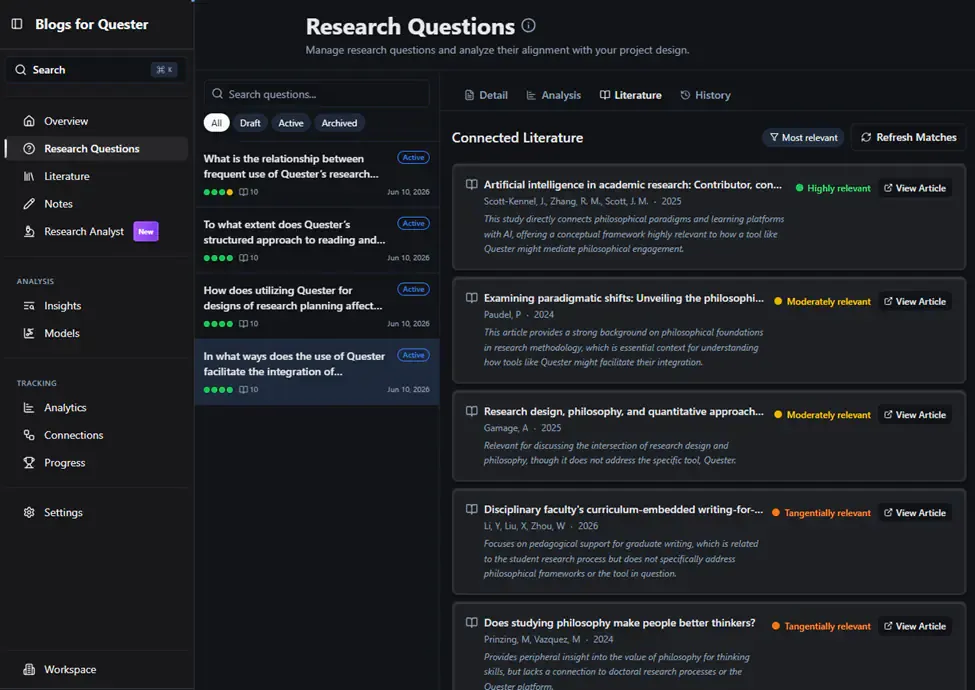
This alignment goes beyond simple topical relevance. The alignment forces students to consider whether the literature reflects their own philosophical perspectives: their ontology, methodology, epistemology, and axiology. When students find articles that resonates both with their specific questions and broader worldviews, the synthesis of the final manuscript becomes more powerful. The Research Question element thus becomes the anchor for this process. This element ensures every piece of literature integrated into the project serves a clear, philosophical, and methodological purpose.
Constructing Voice and Refining Expression
As students read and construct, the Notes element becomes essential. Here, students store their interpretations of articles read, moving beyond simple summaries to capture evolving perspectives. These notes serve as the “clay” from which final academic voices emerge. By regularly documenting these interpretations, students build records of their own thinking that develop alongside their reading.
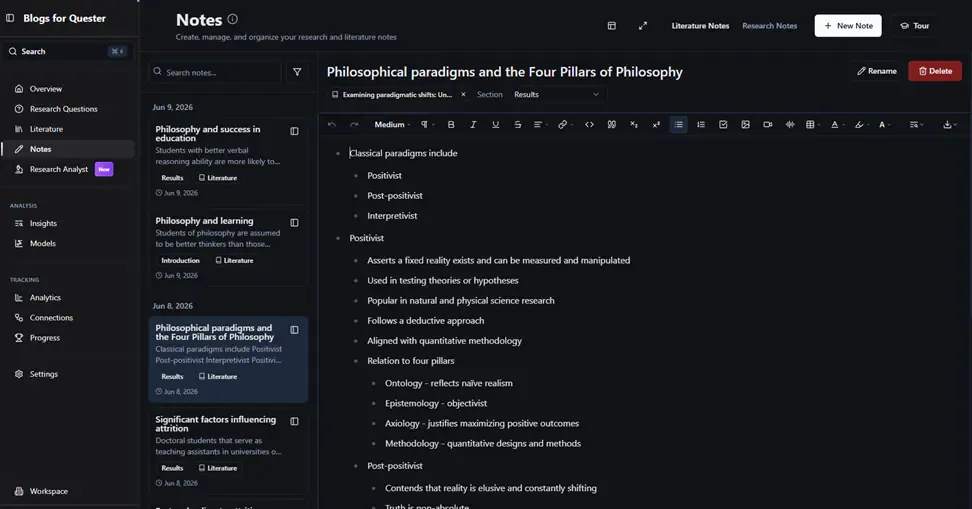
Once these ideas take form, the Research Analyst element assists students in editing their voice. This element allows students to step back and examine emerging narratives. Students are also able to identify areas where arguments may lack clarity, where connections to the literature feel thin, or where their voices need strengthening. This is not merely proofreading; this is high-level intellectual editing that ensures final manuscripts are not just accurate, but compelling and coherent.

Embark on Your Intellectual Architecture
Graduate education should empower students to build something durable, meaningful, and uniquely their own. You deserve a system that respects the complexity of your ideas and the recursive nature of your writing. Quester exists to support this transformation, providing the environment necessary to move from fragmented efforts to a unified, successful research project.

Reach out or sign up for Quester today. Discover how an integrated, daily approach can elevate your writing from a chore into the primary architecture of your intellectual success.
Questions for Consideration
-
How does the perspective of writing as an “iterative process” change the way you approach your daily research sessions?
-
What happens to the quality of an argument when the research process intentionally aligns with specific philosophical frameworks identified in the literature?
-
In what ways could you restructure your weekly schedule to replace one long session with brief, daily interactions with your project?
-
How might identifying “cognitive mentors” in your literature search help you overcome writer’s block or lack of direction?
Read next

The Global Scholar: Logistical Realities of International Academic Life
The Graduate Education Journey by Dane Bozeman, PhD

Welcome to Quester
Navigating the Disciplinary Maze: Writing in Graduate Education
Introducing Quester and the Quester Group