Navigating the Disciplinary Maze: Writing in Graduate Education
Introducing Quester and the Quester Group
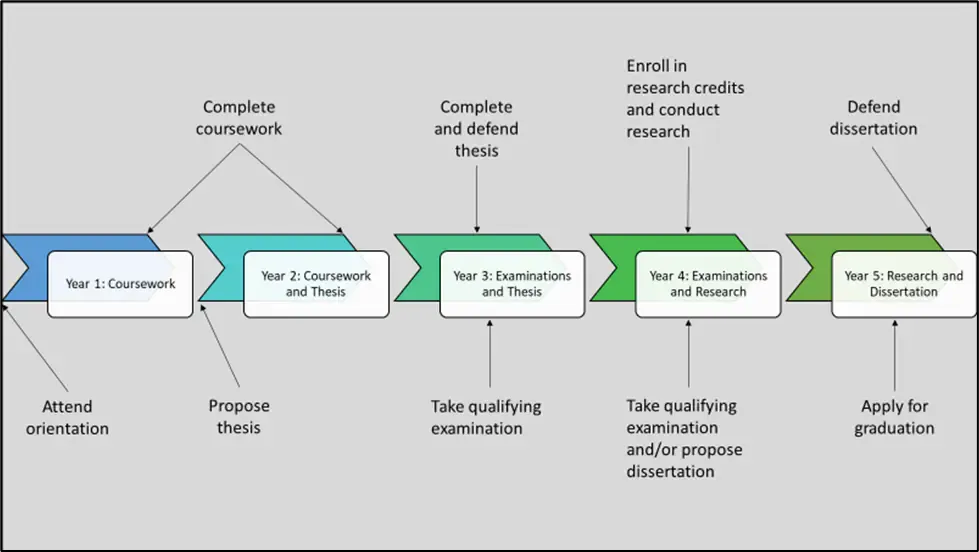
The graduate journey often feels like entering a vast, uncharted landscape. Beyond the fundamental requirements of coursework and examinations, graduate students face the daunting task of mastering a specific disciplinary voice. This transition from knowledge consumption to knowledge generation requires a shift in how one interacts with text and data as well as how one views intellectual identity. Navigating this landscape demands more than simple diligence; the process requires sophisticated cognitive strategies, an appreciation for the long timeline of graduate education, and a commitment to integrating disparate activities over time into a unified whole.
The Burdens of Scholarly Writing
Graduate education presents unique challenges that distinguish graduate from undergraduate writing. For example, the sheer volume of reading required to inform a single manuscript can overwhelm even the most disciplined students. Synthesis requires processing hundreds of pages, keeping track of theoretical nuances, and maintaining a clear perspective across multiple, sometimes conflicting, sources. This constant influx of information must then be distilled into an original argument, a task focrcing students to simultaneously manage immense amounts of data and construct a clear, authoritative voice.
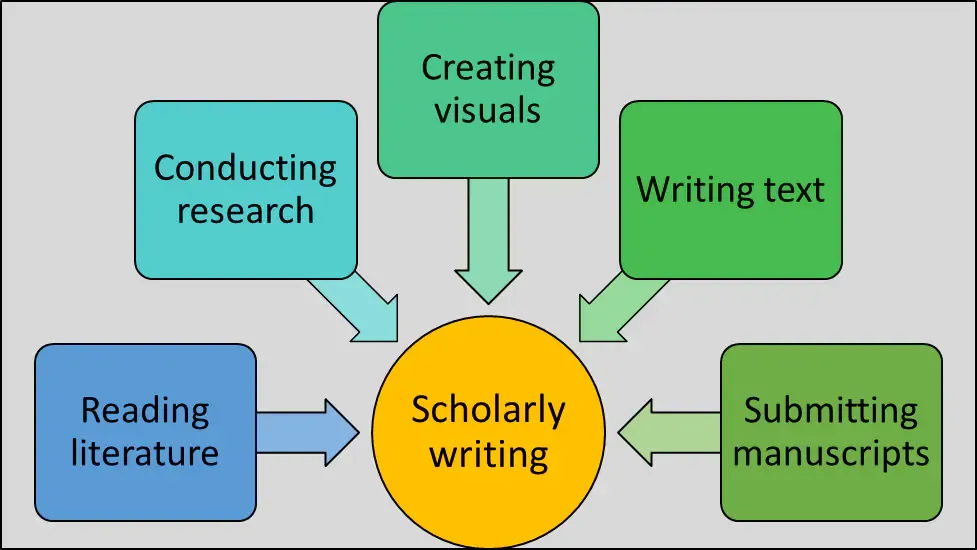
Furthermore, academic rigor demands the integration of diverse information sources in writing. For example, visuals such as tables, figures, and conceptual diagrams are not merely about presenting results; these visuals act as anchors for writing manuscripts. Students often find that writing to these visuals helps clarify their logic and identify gaps in their reasoning. Yet, the dual challenge of editing one’s cognitive understanding of the topic while simultaneously refining one’s prose can lead to intense mental fatigue. Students must constantly bridge the gap between abstract concepts and concrete data, ensuring that the voice remains consistent throughout the evolution of manuscripts.
The Reality of the Academic Timeline
Another significant source of frustration for students involves the temporal reality of academic writing. Many students harbor the hope that a few weeks of intensive effort will lead to published journal articles. This expectation stands in stark contrast to reality. Articles often require years of preparation, starting with the mastery of research instruments, followed by months of rigorous data collection, complex analysis, and several initial drafts.
Even after the manuscript reaches a journal, the journey remains far from over as only now can the submission process begin. Editorial discussions, peer-review cycles, and revisions frequently extend the process by months or more. We know of a colleague who spent over a decade trying to turn a manuscript into an article. That article now has almost 30,000 citations. Our colleague spent more time in the submission process than in the research and drafting processes. This long-term reality requires a fundamental change in mindset. Students must learn to view their work as a sustained, multi-year commitment rather than a series of short-term sprints.
The Power of Daily Consistency
Given these demands, the “Saturday Writing Marathon” (the attempt to cram six to eight hours of intense, high-stakes writing into one day) often produces diminishing returns. This approach leads to fragmented thinking, burnout, and the common, unfortunate abandonment of manuscripts.
The developers of Quester suggest a more sustainable approach: fifteen to thirty minutes of daily engagement. This habit allows the brain to process complex disciplinary norms incrementally. Daily interaction keeps the research alive in the mind, permitting subtle refinements to the writing voice and steady progress through even the most difficult texts. By spreading the workload, students maintain the cognitive flexibility needed to manage both the data and the prose, ultimately resulting in a much higher quality of output.
Externalizing Mental Maps with Quester
Quester helps graduate students navigate this maze by providing tools designed specifically to externalize and test the researcher’s evolving mental models. The Model element serves as an essential space for this work. Here, students can generate conceptual models that visualize their understanding of a specific phenomenon. These diagrams act as an external repository for the mental maps that otherwise remain trapped in the mind. By sketching out relationships between variables, theories, and concepts, the scholar can see where their logic holds strong and where the argument requires further evidence.
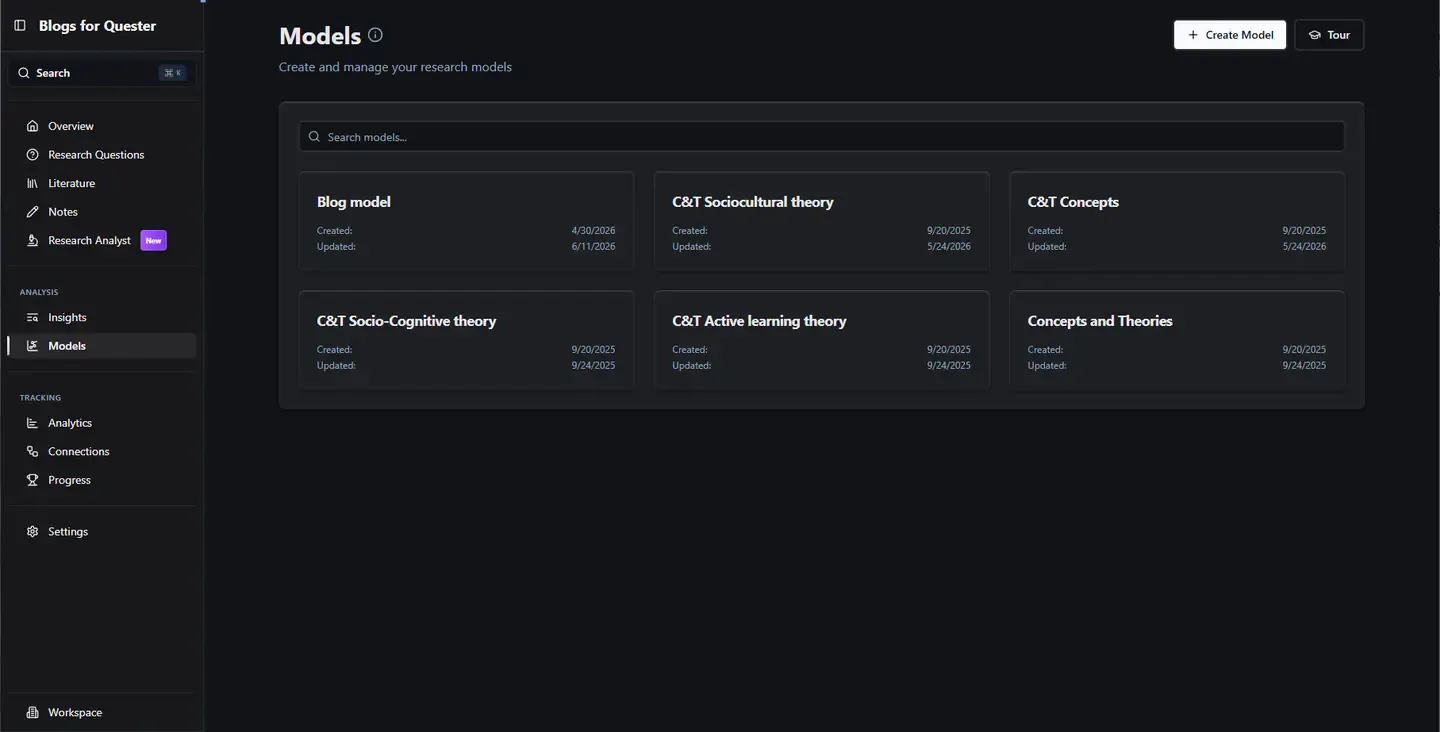
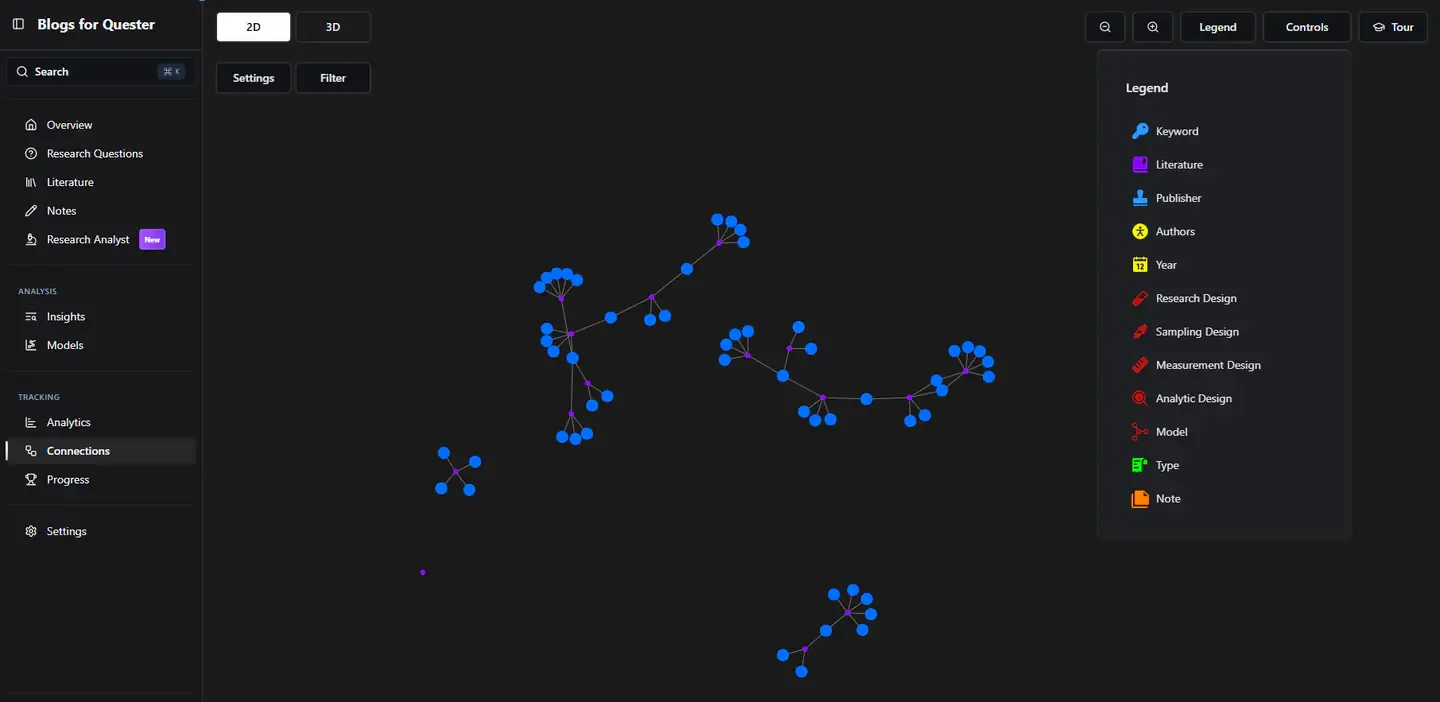
This process becomes even more powerful when linked to the Connections feature. Once a model exists within Quester, students can “test” the accuracy and scope of these mental maps against the extant literature stored in the Literature element. By creating links between the components of models and specific scholarly articles, researchers provide rigorous evidence for every assertion. This practice allows researchers to see exactly which parts of their mental map find support in the literature and which areas remain speculative or require more investigation. When the literature does not support specific relationships in the model, students receive immediate feedback, allowing for the refinement of arguments before writing begins.
Achieving Disciplinary Clarity
Navigating the disciplinary maze of graduate education requires students to integrate complex reading, precise visual representations, and a nuanced writing voice over an extended period. With the right systems in place, this process becomes not only manageable but deeply rewarding. Quester provides the space to externalize thought, test logic against established knowledge, and maintain the daily momentum necessary for long-term scholarly success.

We invite you to reach out or sign up for Quester today. Take control of your research path, refine your scholarly voice, and transform the challenges of graduate writing into the foundations of your professional career.
Questions for Consideration
-
How does the process of constructing a visual (table or figure) reveal potential weaknesses in the logic of your current draft?
-
In what ways could externalizing your mental map using the Model element change the way you read and organize new literature?
-
How might your writing voice shift if you approached your research as a multi-year professional commitment rather than a series of immediate deadlines?
-
What happens to your cognitive understanding of a topic when you edit your writing and your mental model simultaneously?
Read next
The Architecture of Thought: The Nature of Writing
Introducing Quester and the Quester Group

The Global Scholar: Logistical Realities of International Academic Life
The Graduate Education Journey by Dane Bozeman, PhD