The Role of Design: The Nature of Research
Introducing Quester and the Quester Group
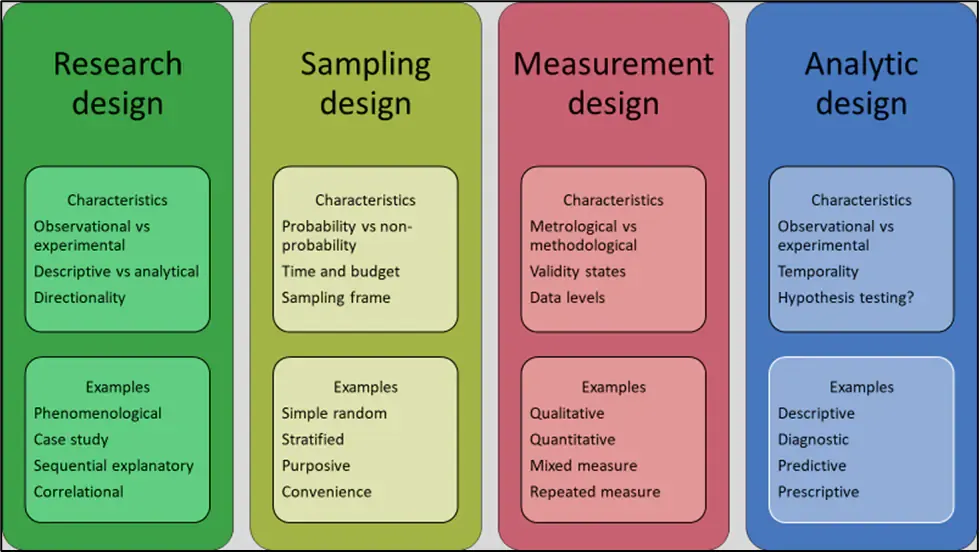
Research in graduate education is a daunting challenge for all graduate students, characterized by overwhelming amounts of data and competing expectations. Many students perceive research as a linear path. However, research rarely happens in this manner. Instead, the nature of research is an iterative and recursive process informed by choices. When these choices align, research moves from being a series of confusing, isolated tasks toward a cohesive, compelling discovery. Recognizing the four pillars of design in research provides the clarity necessary to understand the nature of research, regardless of the research process.
Defining the Four Pillars of Research Design
From the most abstract philosophical treatise to the most concrete empirical study, research requires designs. These designs manifest through four fundamental pillars. While terminology may shift across disciplines, these pillars remain essential.
-
Research Design: This pillar serves as the blueprint research. The pillar defines the overall strategy, linking the research question to the data collection and analysis. The pillar determines whether the inquiry will be experimental, correlational, case-based, or ethnographic, establishing the logic that governs all subsequent steps.
-
Sampling Design: This pillar addresses the “who” or “what” of the research. The pillar involves the selection of participants, artifacts, or data points. Decisions here involve defining the scope, identifying inclusion criteria, and determining the feasibility of reaching the intended population. A well-constructed sampling design ensures the findings of research hold relevance and validity within the broader scholarly context.
-
Measurement Design: This pillar focuses on how the researcher observes and quantifies variables or concepts. In qualitative research, this involves defining protocols for interviews, observations, or document analysis. In quantitative research, this involves selecting or creating instruments, surveys, or sensors to ensure reliability and validity. This pillar ensures that the data collected truly represent the phenomena under investigation in research.
-
Analytic Design: This pillar details the methods used to interpret the gathered data. The pillar defines the transformation of raw information into meaning. Whether utilizing statistical software for trend analysis or thematic coding for qualitative interpretation, this design provides the mechanism for drawing defensible conclusions from research.
These pillars are not optional. Every researcher makes decisions regarding these four pillars, whether explicitly or implicitly. The strength of research rests on whether these pillars harmonize. Research that utilizes a quantitative measurement design but follows a qualitative analytic design, for example, will inevitably suffer from logical fragmentation.
Leveraging Quester to Architect Discovery
The developers of Quester bring over two decades of hands-on experience conducting research across the humanities and sciences. Furthermore, they have spent an equivalent amount of time mentoring hundreds of graduate students. This deep experience informs every aspect of the Quester platform. They understand students often struggle to translate abstract design concepts into specific research.
Quester simplifies this process through integrated elements that foster intentional design. Students can begin by identifying the specific designs of their own research within the Overview element. This element acts as the project’s mission control, allowing students to articulate their designs clearly. By documenting these designs early, students avoid the common trap of mid-project drift, where methodology begins to diverge from the original research questions.
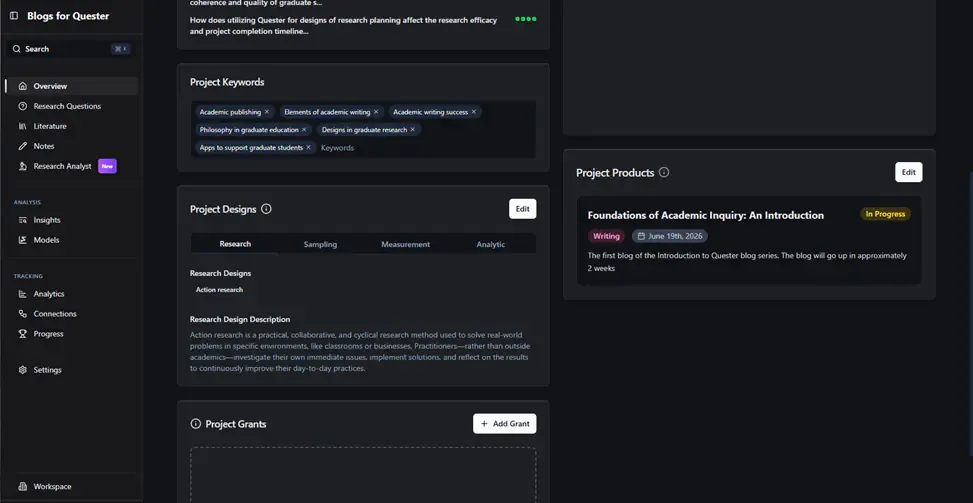
Furthermore, Quester allows students to identify and store the designs of individual articles within the Literature element. As student read existing research, they can tag each source with respective designs. This turns the literature review into a masterclass in research. Instead of merely summarizing the results of previous research, students learn to evaluate the philosophy underlying research.

Finally, the Analytics element provides a bird’s-eye view of these collected designs. Students can determine which designs are prevalent in their literature. Comparing these approaches to their own research helps students situate themselves within the discipline. If most successful research in a particular discipline uses a specific sampling design, students can adjust their own sampling design to align with those established standards or argue convincingly for a departure from those standards.
Sustainable Design Through Daily Practice
Effective design in research is not a static state. Some students fail to complete research because they try to finalize their designs in a single, desperate burst of energy. The developers of Quester advise against this “binge-designing.” Instead, consistent daily engagement remains the most effective path to intellectual maturity. Spending just fifteen to thirty minutes each day within Quester allows students to refine their design pillars incrementally.
This daily practice allows for the iterative testing of one’s research process. By continuously revisiting the Overview element and comparing to new insights stored in the Literature and Notes elements, students build an increasingly sophisticated perspective of their research. This consistent engagement reduces the anxiety associated with the research process, replacing fear with the confidence that comes from a well-thought-out, clearly documented set of designs for research.
Invitation to Integrated Scholarship
The designs of research do not appear by accident. They are constructed through intentionality, clarity, and the use of tools that mirror the cognitive processes of researchers. You deserve a system that understands the complexities of your discipline and supports your growth as a scholar. Quester provides exactly that: a framework for building a study that is as rigorous as it is meaningful.
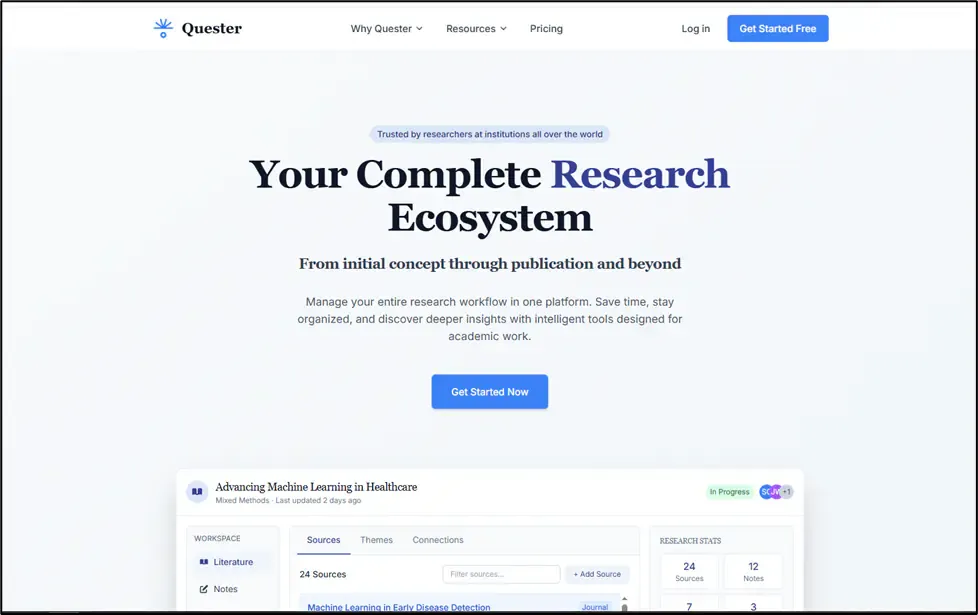
Reach out or sign up for Quester today. Discover how an integrated approach to research can elevate your understanding of the nature of research, ensuring your work as a researcher is built upon the strongest possible foundation.
Questions for Consideration
-
In what ways do your current choices in sampling design limit or expand the possible conclusions of your research?
-
How does aligning your analytic design with your research philosophy strengthen the overall validity of your study?
-
What does an analysis of your current literature reveal about the dominant methodological trends in your discipline?
-
How might your research process change if you explicitly mapped your research, sampling, measurement, and analytic designs to your research questions?
Read next

The Development of Quester: Engineering an Academic Ecosystem
Introducing Quester and the Quester Group
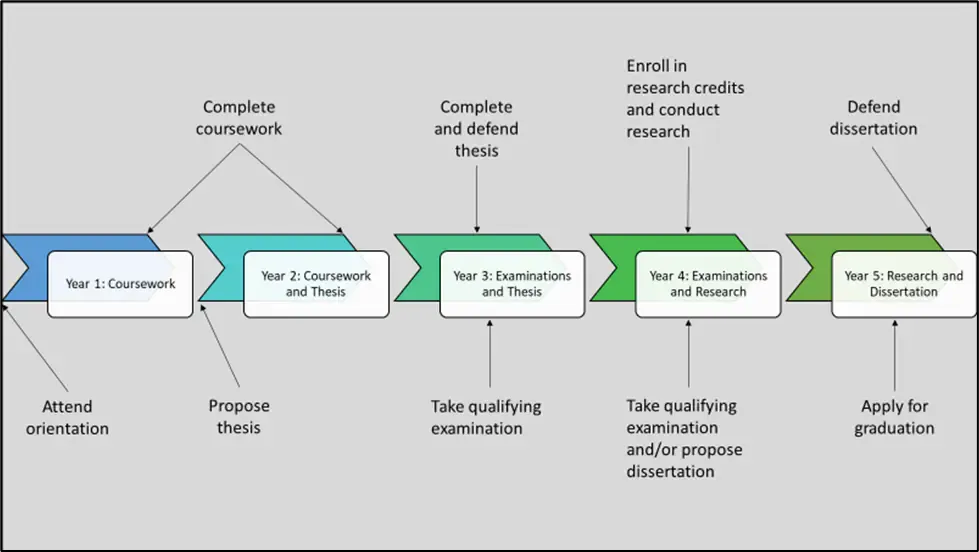
Navigating the Disciplinary Maze: Writing in Graduate Education
Introducing Quester and the Quester Group
The Architecture of Thought: The Nature of Writing
Introducing Quester and the Quester Group