The Development of Quester: Engineering an Academic Ecosystem
Introducing Quester and the Quester Group
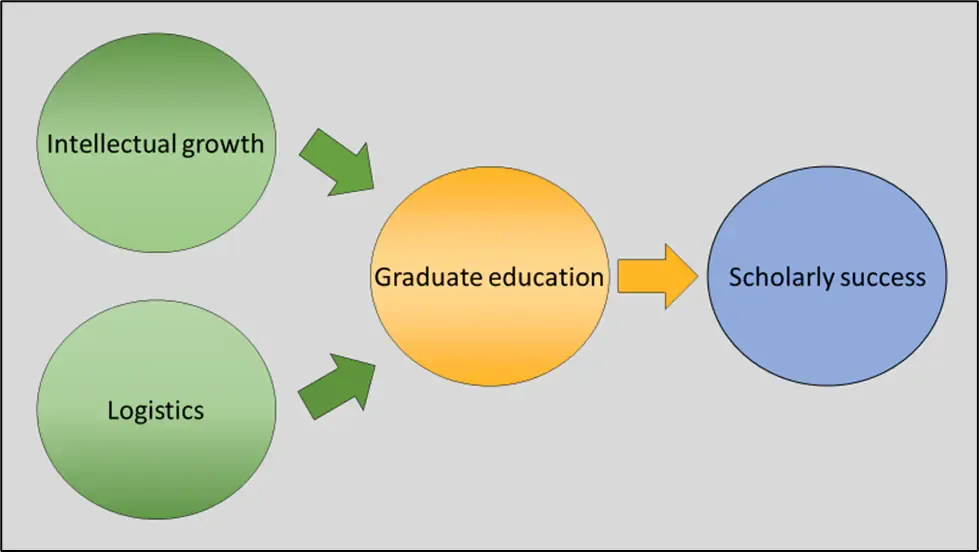
Graduate education remains a unique, demanding pursuit, often characterized by the intersection of profound intellectual growth and significant logistical frustration. For many graduate students, the path to a terminal degree feels like navigating an uncharted landscape. Scholarly success requires more than raw talent or sustained effort; success demands a robust, integrated ecosystem that supports the intellectual and logistical realities of graduate education. The creators of Quester recognized this need years ago. They observed talented, dedicated students faltering not because of a lack of brilliance, but because of a lack of support. This realization sparked the development of Quester: a platform engineered to transform the chaotic process of graduate education into a manageable, integrated, and successful journey leading to scholarly success.
A Legacy of Experience
The creators behind Quester did not develop the platform from a theoretical distance. Instead, they brought decades of lived experience in graduate education to the task. They have occupied every role within the hierarchy of graduate education: as students grappling with the weight of original inquiry, as researchers tackling complex data sets, as educators facilitating deep learning, and as advisors guiding graduate students through the most turbulent phases of graduate education.
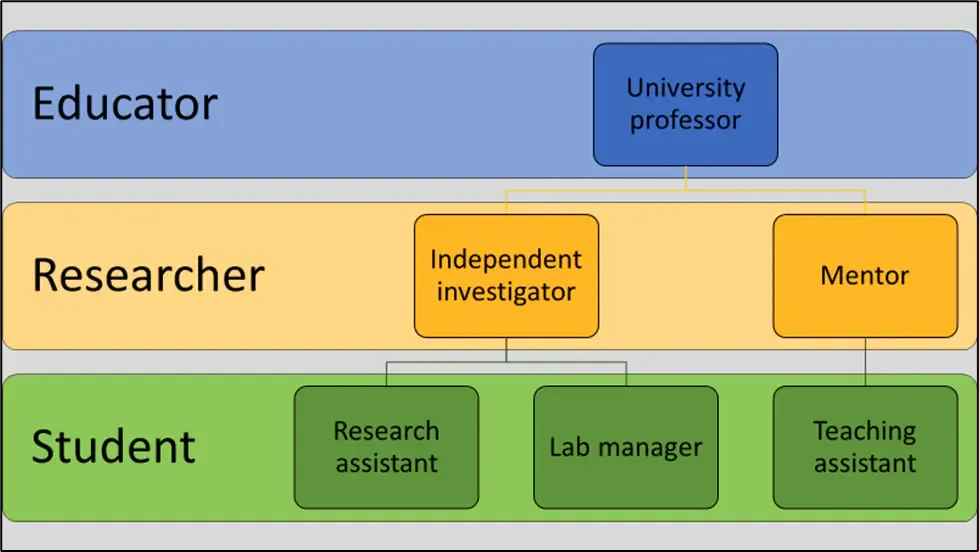
This multi-faceted background provided a unique vantage point. Having seen the systemic barriers from every possible angle, the creators understood that the common failure points (attrition, abandoned drafts, and unsustainable work habits) did not stem from individual incompetence. Rather, these issues arose from a pervasive lack of holistic tools. Consequently, the creators committed five years to designing Quester, meticulously building a platform that addresses these fundamental needs. Today, they remain fully prepared to work alongside any graduate student, regardless of field or stage, to turn the dream of completing graduate education into a reality.
Two Decades of Scholarly Rigor
The foundation of Quester rests upon over twenty years of direct, hands-on experience conducting research across the humanities and sciences. This interdisciplinary history ensures that Quester functions effectively for diverse endeavors in graduate education. The creators did not build a tool for a single niche; they created an ecosystem capable of supporting the unique requirements of various scholarly fields.
Beyond conducting primary research, the creators have spent an equivalent amount of time mentoring graduate students across all academic disciplines. This mentorship history has been remarkably prolific. Over the past two decades, the creators have assisted in the successful completion of over one hundred doctoral dissertations and the publication of more than three hundred peer-reviewed articles. This deep engagement with the academic publishing machine provided an unparalleled look at the specific challenges researchers face when moving from initial idea to finished manuscript. They have personally seen what works, what fails, and what truly facilitates the transition from student to independent researcher.
Engineering the Academic Ecosystem
Traditional research management often resembles a chaotic collection of scattered notes, disconnected browser tabs, and fragmented digital folders. Such an approach inevitably creates friction, slowing down the creative process and leading to the “binge-working” cycle that characterizes so much student distress. Quester functions differently because the architecture of the platform mirrors the actual cognitive architecture of high-level research.
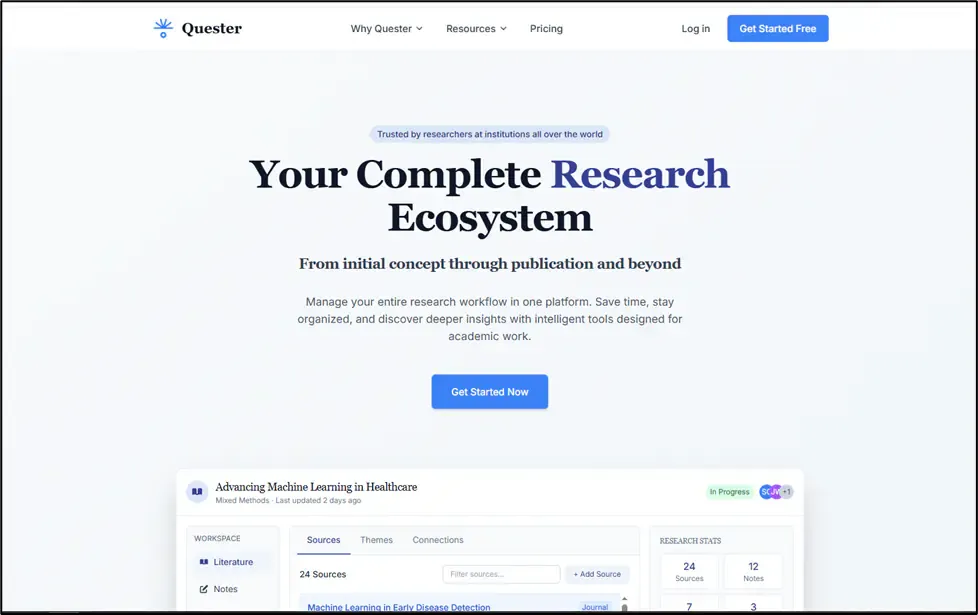
By integrating the Literature, Analytics, Connections, and Research Question elements, Quester creates a seamless flow of information. When students conduct a search in the Insights element, the platform does more than return a list of links. The system helps students connect those findings to their personal philosophical frameworks and specific project goals. The platform forces a meaningful dialogue between the raw literature and the emerging argument, ensuring that every hour spent on the platform advances the project as a whole.
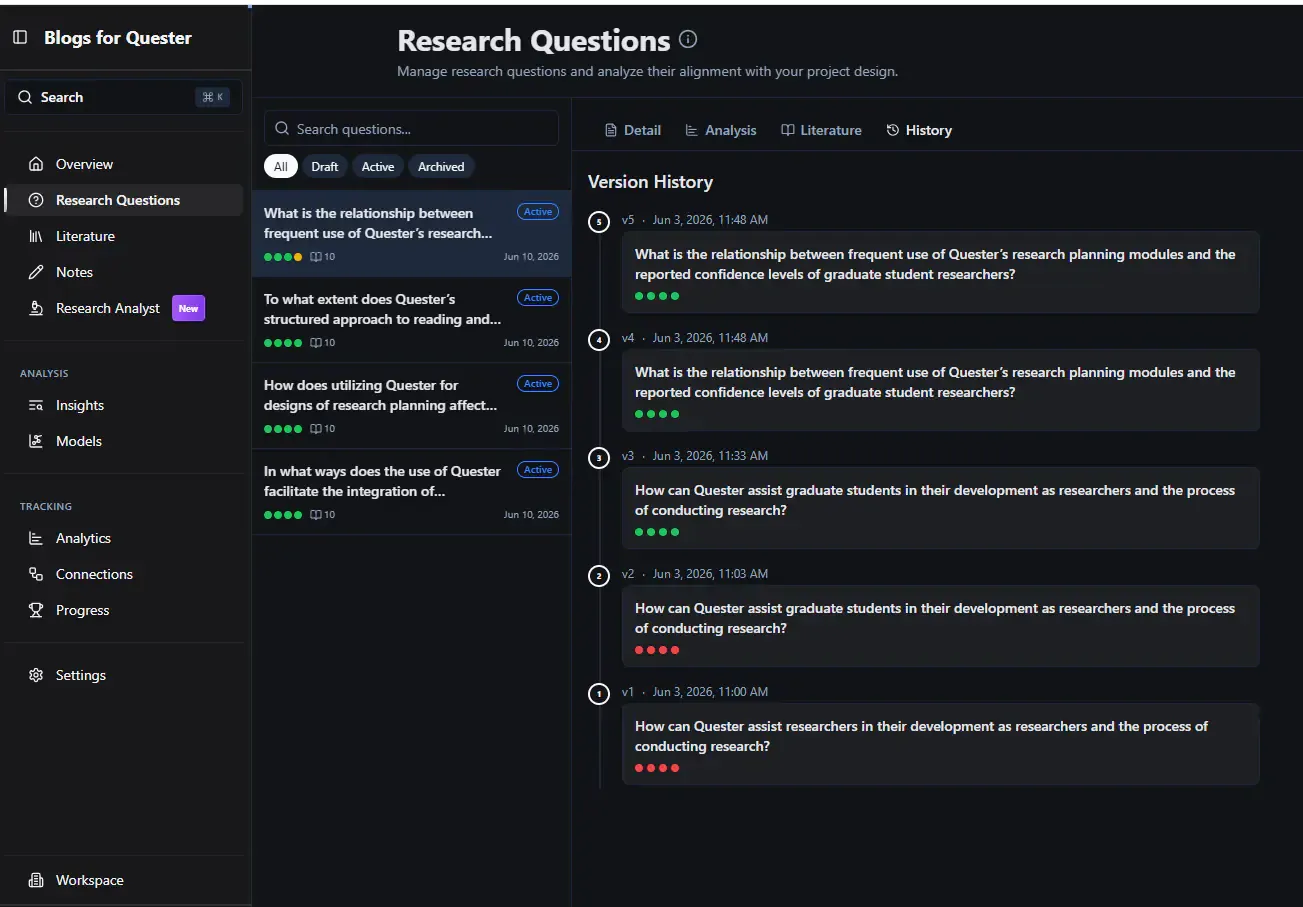
This ecosystem approach reduces the mental overhead of research. Instead of spending time managing files or wrestling with formatting, students use those precious minutes for synthesis and critical analysis. The platform handles the logistics, while the human researcher focuses on the discovery.
Moving Beyond the “Saturday Marathon”
Perhaps the most significant contribution of the Quester platform involves the transformation of work habits. The creators, drawing on their long history of advising successful doctoral candidates, recognized that the “Saturday Marathon” (where students attempt to cram a week’s worth of work into six to eight hours) rarely leads to excellence. This unsustainable pattern breeds anxiety and low-quality output.
Quester changes this paradigm by making daily engagement not just possible, but frictionless. Even fifteen to thirty minutes per day within the platform maintains intellectual momentum, allowing ideas to incubate naturally. Because the platform retains the context of every previous search, thought, and note, students avoid the “re-entry cost” that usually plagues periodic work. Returning to a project after a full day away no longer requires a lengthy period of remembering where things left off; the platform holds that history, allowing students to pick up the thread instantly.
The Path to Integrated Scholarship
Graduate school is not meant to be a solitary ordeal. Graduate school is an apprenticeship, a process of learning to enter a larger conversation. The creators of Quester built this platform to serve as a catalyst for that entry. They have witnessed first-hand the joy of students successfully defending a dissertation after years of uncertainty, and they have seen the relief of a researcher finally seeing their work published in a respected peer-reviewed outlet.
The goal of Quester is to ensure that every graduate student has access to the same level of structured, high-level support that the creators have provided to their mentees over the last twenty years. This is not just a collection of features; the platform is a professional-grade environment for scholarly success, informed by the collective wisdom of seasoned researchers and educators.
Join the Quester Community
You are currently participating in a journey that is as intellectually challenging as it is personally transformative. You deserve an ecosystem that works as hard as you do, one that understands the nuances of the scholarly process and honors the effort you invest daily. The development of Quester was fueled by the desire to see more graduate students cross the finish line with their integrity, their health, and their best work intact.
Reach out or sign up for Quester today. Discover how an ecosystem created by experienced researchers can change the trajectory of your own scholarly career.
Questions for Consideration
-
How does knowing that an experienced team of researchers built your research tools change your trust in those tools?
-
In what ways can a system that integrates literature, analytics, and research questions reduce the “mental clutter” of a complex project?
-
How might transitioning from a “marathon” work schedule to a “daily habit” schedule influence the long-term quality of your dissertation?
-
What specific challenges in your current research process could be mitigated by a platform that preserves the context of your work over long periods?
Read next
The Role of Design: The Nature of Research
Introducing Quester and the Quester Group
Navigating the Disciplinary Maze: Writing in Graduate Education
Introducing Quester and the Quester Group
The Architecture of Thought: The Nature of Writing
Introducing Quester and the Quester Group