Beyond the Ivory Tower: The Role of Philosophy
Introducing Quester and the Quester Group
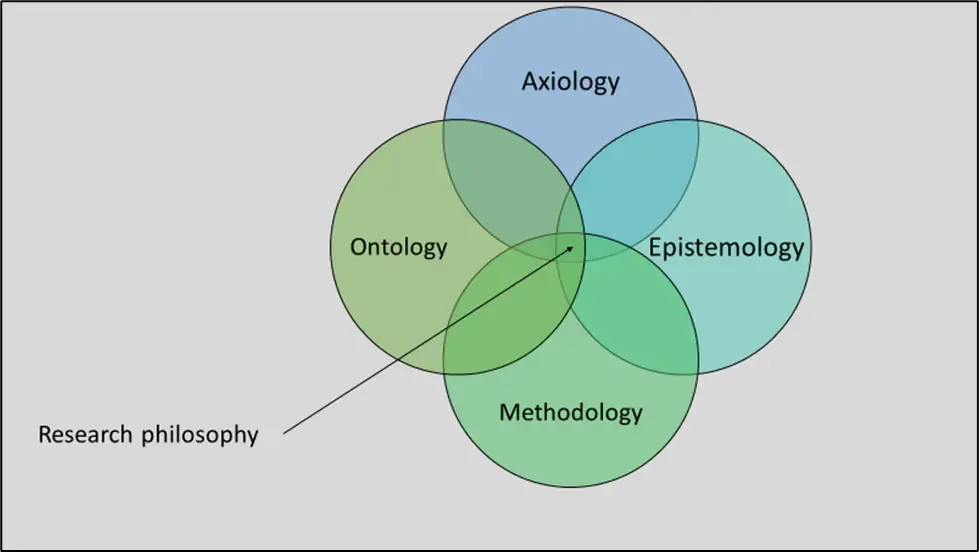
Many novice graduate students approach graduate education and research as a series of technical tasks: taking courses, attending meetings, gathering data, selecting statistical software, or writing based on pre-defined templates. For advanced graduate students, graduate education often undergoes a transformation from a mere academic exercise into a deeply personal quest for understanding as they transition into becoming researchers. Research demands engagement with philosophical foundations that underpin the entire process of research. Stepping beyond the metaphorical “ivory tower,” where theory remains isolated from practice, allows researchers to recognize every research project rests upon a bedrock of assumptions accumulated into a research philosophy. Without explicit awareness of these pillars, research lacks coherence, depth, and genuine impact.
The Philosophical Foundations of Scholarly Success
The study of philosophy offers a unique advantage to graduate students navigating the complexities of research. Philosophy does not merely provide abstract knowledge; rather, engagement with philosophy equips researchers with a refined set of cognitive tools. These tools allow researchers to interrogate the very nature of their own work, ensuring that every design choice, every question asked, and every conclusion drawn proceeds from a deliberate and defensible position. When students treat philosophy as a practical discipline, the research process becomes a journey of intellectual maturation rather than a series of disconnected hurdles.
The Philosophical Pillars of Research
Research is not an objective, neutral activity. Researchers recognize they enter the field with a worldview: a lens through which they perceive value, knowledge, and reality. To conduct research, one must articulate this lens. Graduate students who ignore the research philosophy of their work risk basing their findings on contradictory or unexamined assumptions. Students gain the necessary clarity to defend their actions and ensure their conclusions remain robust with the following four pillars of philosophy:
-
Axiology: This pillar considers the role of values and ethics in research. This pillar addresses the questions: “What values influence the researcher?” and “How do these values affect the scholarly process?” Axiology acknowledges researchers carry inherent biases and ethical commitments, demanding transparency regarding these influences throughout research.
-
Epistemology: This pillar examines the nature of knowledge and how individuals come to know things. This pillar addresses the questions: “What constitutes valid knowledge?” and “How does the researcher gain access to this knowledge?” Epistemological choices dictate whether a scholar prioritizes empirical observation, logical reasoning, or the lived experiences of participants.
-
Methodology: This pillar bridges the gap between abstract theory and practical application. This pillar addresses the question: “What procedures will most effectively answer the research question?” This pillar translates beliefs about the world into concrete actions, such as selecting qualitative, quantitative, or mixed-methods approaches.
-
Ontology: This pillar explores the nature of reality and being. This pillar addresses the questions: “What exists?” or “What is the nature of the world?” An ontological stance determines whether a researcher views reality as a single, objective entity waiting to be discovered or as a subjective experience constructed through human interaction.
Integrating Philosophy into the Research Question
When graduate students fail to engage with philosophy, their research often lacks focus or internal consistency. The Research Question element in Quester provides a powerful space for students to move beyond superficial planning. Students can employ this tool to craft nuanced questions explicitly addressed through their research philosophy.

Within Quester, the Research Question element does not function as a static notepad. Instead, this element serves as a dynamic hub that allows students to link their research directly to their chosen designs of research. More importantly, this element encourages students to document how their questions align with specific research philosophies. When students articulate why a particular question matters and how the research addresses that question based on these pillars, the resulting research becomes focused and gains clarity.
Connecting Philosophy to the Literature
Research thrives on the dialogue between theory and findings. Students often struggle to integrate their theoretical framework with the vast body of existing literature. Quester bridges this divide by allowing students to map their Research Questions and underlying research philosophy directly to articles stored in the Literature element.

By creating explicit connections, students can see how their research philosophy aligns with or challenges the work of previous researchers. For instance, students might find literature in their field predominantly relies on a positivist epistemology, while their own ontological commitment to constructionism requires a different approach. Quester highlights these thematic and philosophical overlaps, enabling students to construct stronger, more defensible arguments within the literature review. This practice transforms literature reviews from chores into thoughtful syntheses that validates entire projects.
Sustaining the Intellectual Journey
Engaging with philosophy requires time, patience, and a willingness to confront fundamental assumptions. The developers of Quester recognize such deep work cannot occur during a single, exhausting weekend marathon. By dedicating fifteen to thirty minutes each day to examining the philosophical foundations of one’s work, students create sustainable rhythms. This daily interaction with Quester allows the philosophical pillars of research to mature alongside the development of researchers.
As students use Quester to connect research questions, methodological designs, and scholarly literature, they move closer to an integrated form of research. This process helps avoid the common pitfalls of fragmented, unfocused research. When research philosophies are clear, the path toward a completed, meaningful research project becomes much more visible and manageable.
Invitation to Integrated Scholarship
The journey of graduate education should be an opportunity to deepen one’s understanding of the world and place within the scholarly community. By bringing philosophy into the research process, students gain more than just a degree; they gain a framework for life-long research. Quester provides tools to support this intellectual growth, offering a structured environment for those who wish to elevate their research beyond standard expectations.

Reach out or sign up for Quester today. Discover how an integrated approach to philosophy, research, and literature can transform a project into research that contributes to knowledge.
Questions for Consideration
-
How would a research project change if the underlying ontological assumptions shifted from objective reality to socially constructed reality?
-
In what ways do personal values dictate the choice of participants or data collection methods in a project?
-
How can mapping a research question to existing literature reveal gaps that remain hidden when relying on traditional research methods?
-
What challenges arise when attempting to align a chosen measurement design with a specific epistemological framework?
Read next
The Development of Quester: Engineering an Academic Ecosystem
Introducing Quester and the Quester Group
The Role of Design: The Nature of Research
Introducing Quester and the Quester Group
Navigating the Disciplinary Maze: Writing in Graduate Education
Introducing Quester and the Quester Group